Industrial Screen Printing Services
NPI – Nameplates Inc. screen prints thick, opaque, UV-cured graphics on decals, nameplates, overlays, and control panels, built to stay bright and legible for years. It’s the most durable and cost-effective way to print spot colors across many parts at once, with precise Pantone color matching. Screen printing works on polycarbonate, vinyl, and metal alike.
What Is Screen Printing?
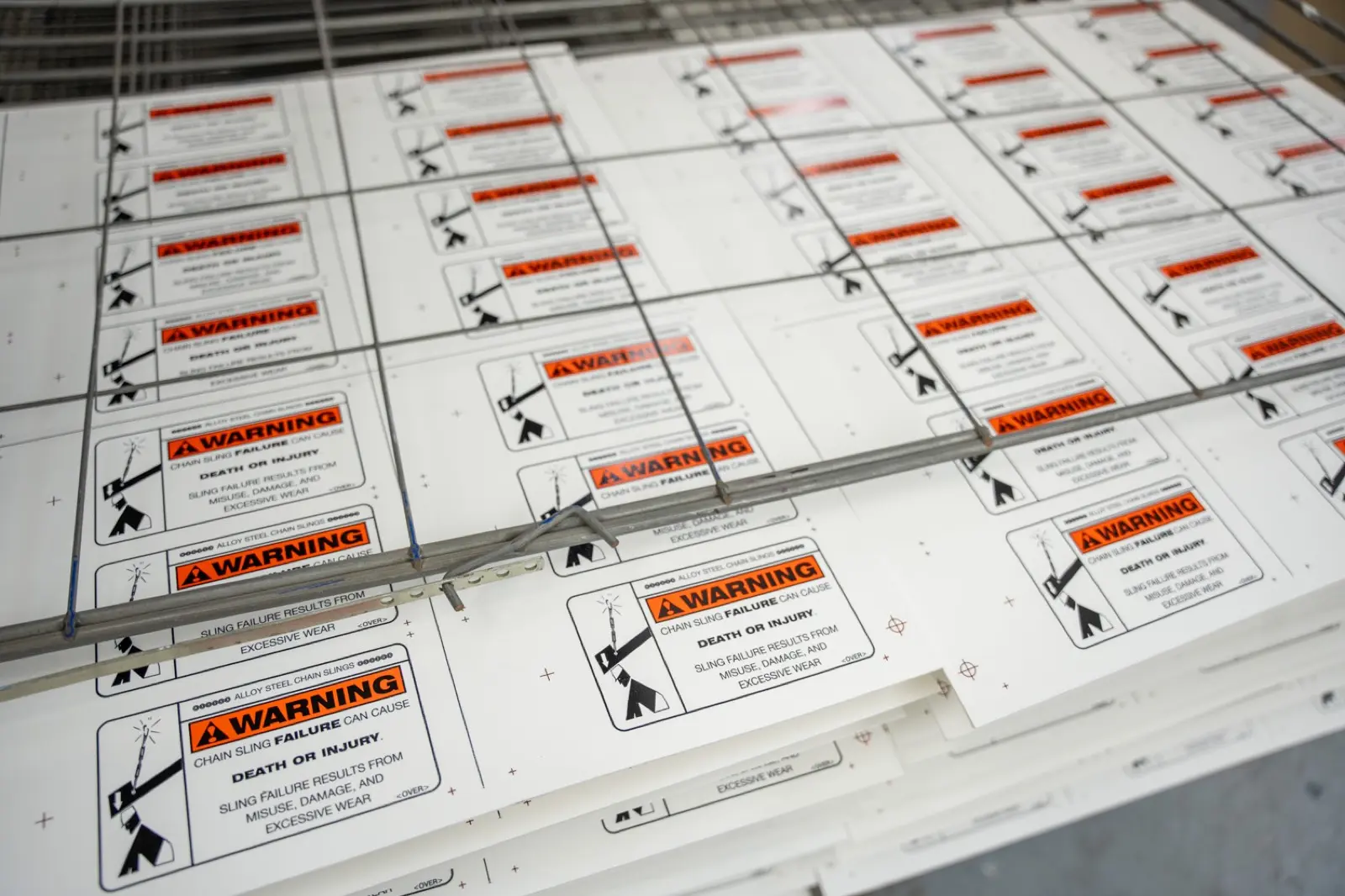
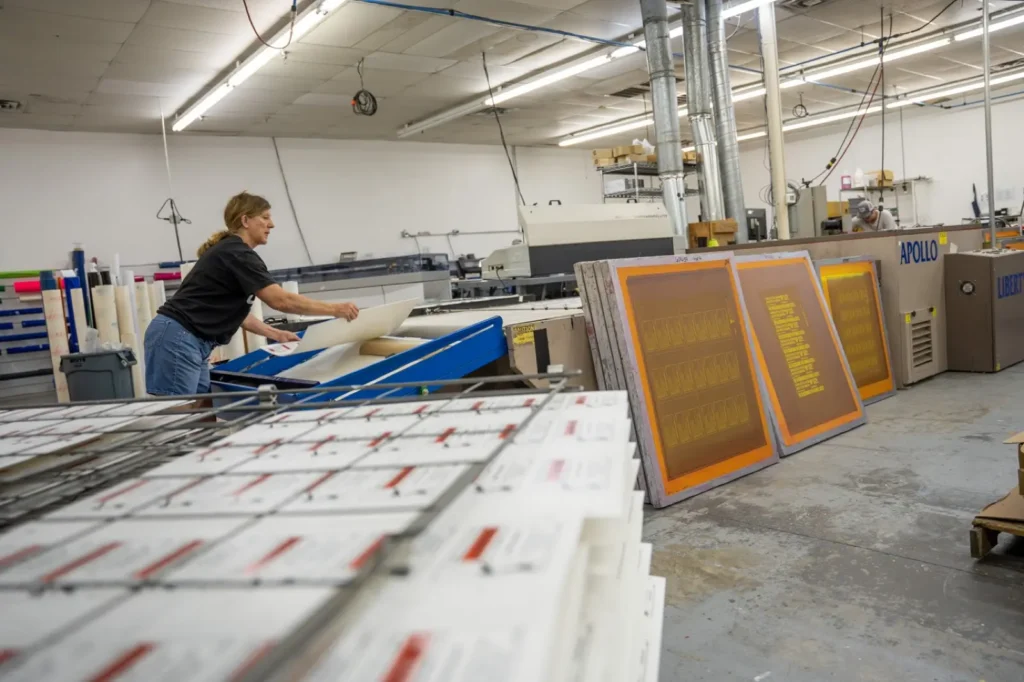
Screen printing pushes ink through a fine mesh screen, or stencil, onto the material below, laying down a thick, opaque layer one color at a time. That thick ink is what makes it so durable: it bonds hard to the surface and stays vivid through sunlight, abrasion, and weather. Because a separate screen is made for each color, screen printing is most efficient when you’re printing the same spot colors across many parts.
What's the Difference Between Screen and Digital Printing?
Both put durable ink on your material, but they suit different jobs. Screen printing lays down thick, opaque spot color and excels at volume, while digital prints full color straight from a file and excels at short runs. The table below shows where each one wins.
| ATTRIBUTE | SCREEN PRINTING | DIGITAL PRINTING |
|---|---|---|
| Ink | Thick, opaque, durable | Thinner, full-color |
| Color | Spot colors, Pantone matched | Full-color, photographic |
| Run size | Efficient for high volumes | Efficient for short runs |
| Setup | A screen burned per color | Prints from file, no screens |
| Best for | High-volume, durable spot-color parts | Detail, color, short runs, variable data |
How Does Screen Printing Work?
Screen printing builds a design one color at a time, in a repeatable sequence:
- We create a screen, or stencil, for each color in your design.
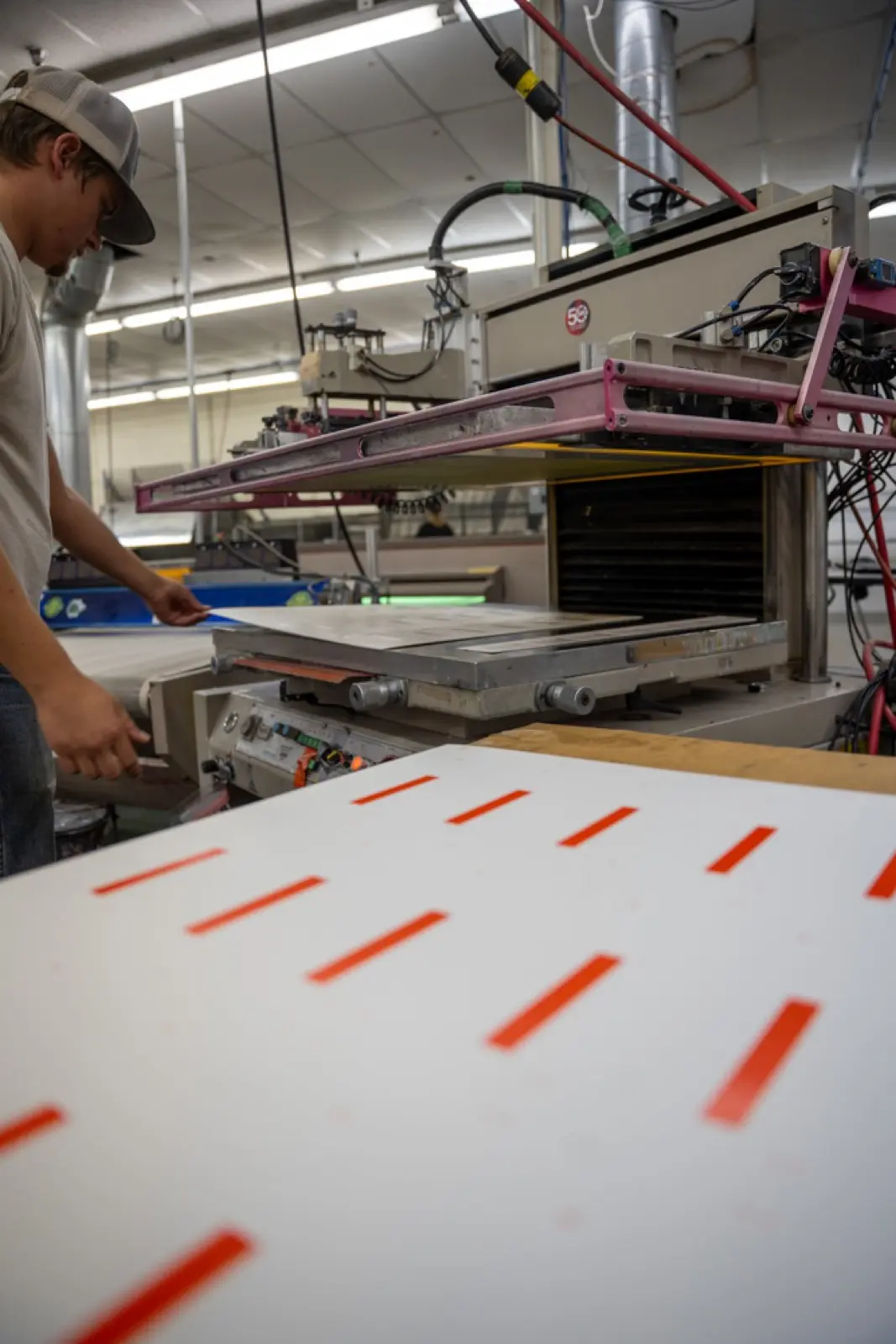
- Ink is pushed through each screen onto the substrate, one color at a time.
- Multiple colors are registered in precise alignment so the design lines up exactly.
- Each ink layer is cured, often with UV light, for a hard, durable finish.
- Printed parts are finished and cut to your specification.
Why Choose Screen Printing?
For durable, high-volume identification in solid colors, screen printing is hard to beat:
Exceptional durability
Linear codes for item, part, and asset numbers.
Opaque, vivid color
Solid coverage that stays bright, even on metal and dark materials.
Pantone color matching
Precise, repeatable brand colors across every run.
Volume efficiency
once the screens are made, high-quantity runs are fast and cost-effective.
What Substrates Can NPI Screen Print?
We screen print on the materials most used for durable industrial identification:
- Polycarbonate — durable and versatile, for overlays and decals.
- Vinyl — conformable and cost-effective, for decals and graphics.
- Metal — aluminum, stainless steel, and brass, for long-lasting nameplates.
What Does NPI Screen Print?
Screen printing suits our most durable, higher-volume products:
- Decals — durable rating, warning, and branded decals.
- Nameplates — opaque, long-lasting graphics on metal.
- Graphic Overlays — control graphics and legends.
- Control Panels — printed panel graphics and legends.
When Digital Printing Is the Better Fit
For short runs, photographic detail, or data that changes piece to piece, digital printing is often the better choice, since it prints straight from a file with no screens to set up. Because both processes run in-house, we’ll recommend whichever suits your job, or combine them on a single project.
Start Your Project
Need durable, color-matched screen printing? Request a quote or talk to a product identification expert, and we’ll recommend the right process, substrate, and finish for your application.