Precision Laser Engraving Services
NPI – Nameplates Inc. laser engraves permanent, high-contrast marks into nameplates, tags, and panels in stainless steel, aluminum, brass, and plastic, with no ink to fade or wear away. Because the laser marks the material itself, the result is precise, repeatable, and permanent, ideal for serial numbers, logos, and fine detail. It’s a fast, economical choice for marking parts in smaller quantities.
What Is Laser Engraving?
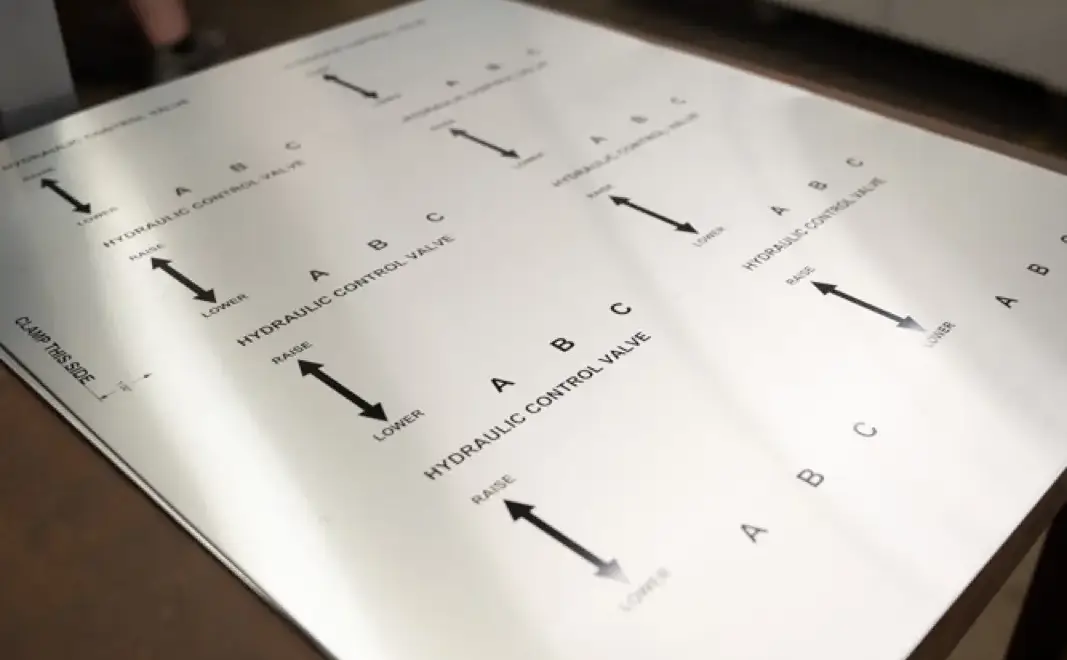
Laser engraving uses a focused laser beam to mark a material directly, either by cutting a shallow recess into the surface or by changing the surface’s color and finish to create high contrast. There’s no ink, no stencil, and no chemistry, the beam does the work straight from a digital file. That makes it precise and permanent: the mark is part of the material, so it can’t rub off, fade, or peel.
What's the Difference Between Laser Engraving and Chemical Etching?
Both create permanent marks in metal, but they work differently and suit different jobs. Laser engraving marks each part individually from a file, which is fast and economical for small runs and variable data. Chemical etching recesses the design across a whole sheet at once, which is efficient when marking many parts together. The table below compares them.
| ATTRIBUTE | LASER ENGRAVING | CHEMICAL ETCHING |
|---|---|---|
| Method | Focused laser marks each part | Chemicals etch the design into metal |
| Best run size | Small to medium quantities | Larger quantities, many parts at once |
| Variable data | Yes — serial numbers and codes per part | Fixed design across the run |
| Materials | Metal and plastic | Aluminum, stainless steel, brass |
| Best for | Fast, precise marking of fewer parts | High-volume durable metal marking |
How Does Laser Engraving Work?
Laser engraving marks a part directly from your artwork, in a short sequence:
- Your design or data is prepared as a digital file.
- The part is positioned under the laser.
- The laser beam marks the surface, cutting a recess or creating high-contrast marking.
- The finished part is inspected and, if needed, cut or finished to specification.
What Materials Can NPI Laser Engrave?
We laser engrave the metals and plastics used for durable identification:
Stainless steel
Permanent, high-contrast marks for harsh and high-heat settings.
Aluminum
Lightweight and economical, for general nameplates and tags.
Brass
A premium finish for branded plates and valve tags.
Plastic
Engraved identification for indoor and equipment applications.
Batch & Date Codes
Lot, batch, and date information for traceability.
What Is Laser Engraving Used For?
Laser engraving suits identification that has to stay permanent and precise:
- Nameplates — permanent branding, ratings, and identification.
- Tags — asset, equipment, and valve tags that resist wear.
- Panels — marked control and instrument panels.
- Serialization — serial numbers and codes unique to each part.
When Chemical Etching Is the Better Fit
For high volumes of the same design in metal, chemical etching is often more economical, since many parts are etched together in a single run rather than marked one at a time. Because both processes run in-house, we’ll recommend whichever fits your material, volume, and detail, or combine them.
Start Your Project
Need permanent, precise laser engraving? Request a quote or talk to a product identification expert, and we’ll recommend the right process, material, and finish for your application.