Chemical Etching for Metal Identification
Chemical etching uses acid to cut a design directly into metal, creating identification that becomes part of the plate itself and can’t wear away like a surface print. NPI – Nameplates Inc. chemically etches nameplates, data plates, and control panels in stainless steel, brass, and aluminum, producing durable, high-contrast marking built to last in demanding environments.
Because the image is etched into the metal rather than printed on top, an etched plate stays legible through abrasion, heat, and years of outdoor exposure. It’s one of the most durable ways to mark metal, and it’s efficient for producing many parts at once.
What Is Chemical Etching?
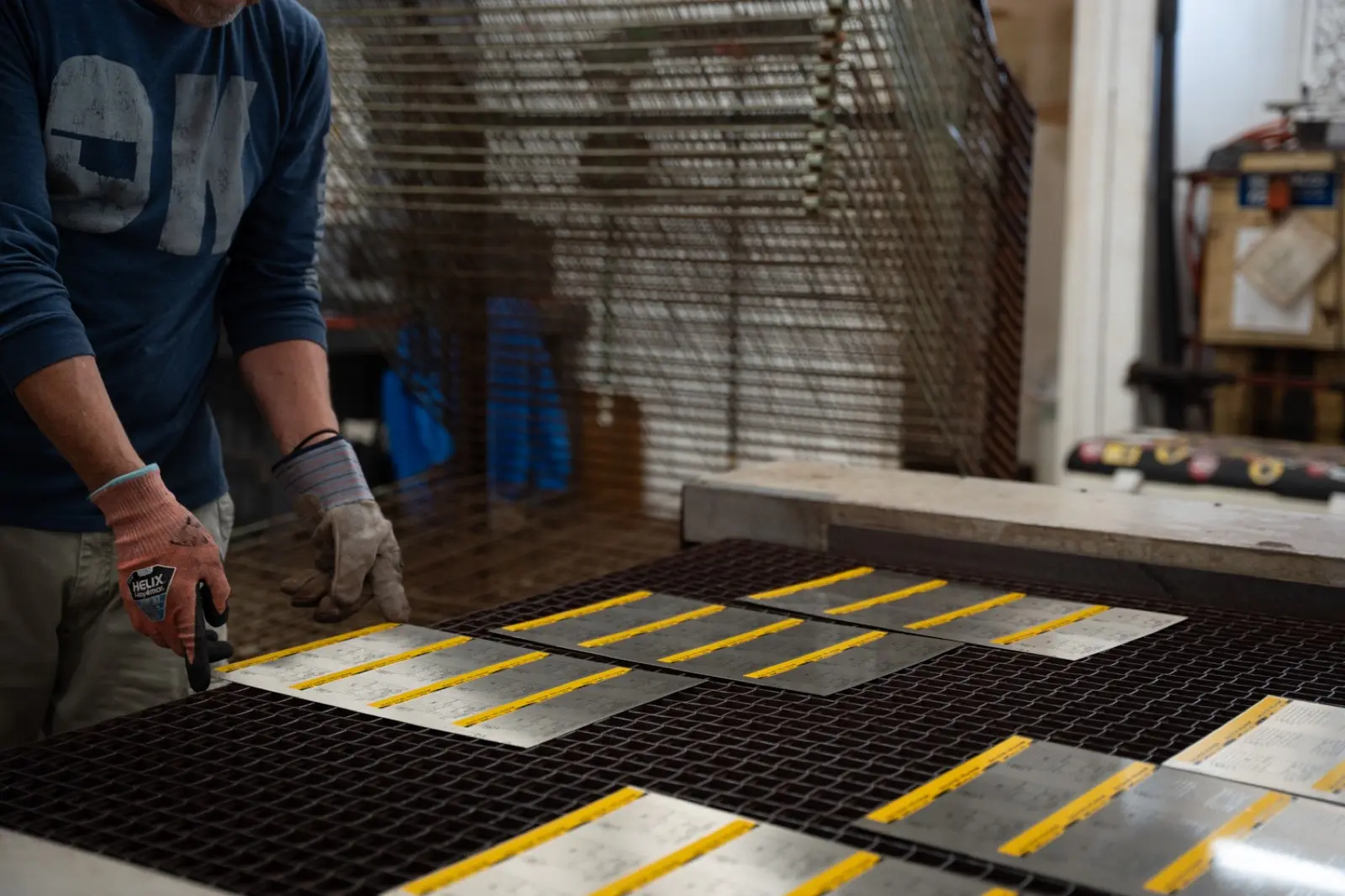
Chemical etching, also called photochemical etching or photo etching, uses a chemical solution to remove metal and leave a precise, permanent design. It works in a repeatable sequence:
- A light-sensitive coating is applied to the metal.
- That coating is exposed through an image of your artwork and developed, leaving only the design areas unprotected.
- A controlled chemical bath etches those exposed areas down into the metal.
The result is a crisp, repeatable image cut into the surface itself, ideal for fine detail, small text, and intricate graphics.
Recessed and Raised Etched Lettering
Chemical etching can produce both recessed and raised lettering, depending on the look and function you need. Recessed etching cuts the design down into the metal, and those recessed areas are often filled with durable paint or enamel for high contrast that holds up over time. Raised etching does the opposite, etching away the background so the lettering and graphics stand up from the surface. Both are permanent, and both survive conditions that would wear a printed mark away.
Metals We Etch
We chemically etch the three metals best suited to the process, each with its own strengths:
| MATERIAL | KEY STRENGTHS | COMMON APPLICATIONS |
|---|---|---|
| Aluminum | Lightweight, economical, corrosion-resistant | Etched nameplates, data plates |
| Stainless steel | Extremely durable, resistant to heat, abrasion & corrosion | Demanding industrial and marine settings |
| Brass | Premium appearance, handles temperature extremes, salt spray & sun exposure | Branded plates, valve tags |
If you’re not sure which metal fits your environment, we’ll help you weigh durability, appearance, and cost against where the part will live.
Why Chemical Etching Lasts
The durability of chemical etching comes down to where the image lives. Because the design is cut into the metal instead of sitting on top of it, it can’t scratch, peel, or fade off the way a surface print can. Etched plates resist abrasion, heat, chemicals, and weather, and an etched industrial nameplate can stay legible through years of outdoor exposure.
It’s efficient, too. Many parts can be etched together in a single run, which makes it a cost-effective choice for larger volumes of durable identification.
What We Etch
Chemical etching suits any metal identification that has to survive a demanding environment, including nameplates, data plates, rating plates, control panel graphics, scales and dials, and tags. When a part faces heat, chemicals, abrasion, or the outdoors, etching keeps it readable for the life of the equipment.
Start Your Project
Need durable etched metal identification? Request a quote or talk to a product identification expert, and we’ll help you choose the metal, etching style, and finish for your application.